 KPMI
KPMI

Search
- Page Path
- HOME > Search
Critical Reviews
- [Korean]
- Smelting and Recycling of Vanadium
- Ho-Sang Sohn
- J Powder Mater. 2026;33(1):61-73. Published online February 28, 2026
- DOI: https://doi.org/10.4150/jpm.2026.00010
- 1,537 View
- 26 Download
-
 Abstract
 PDF
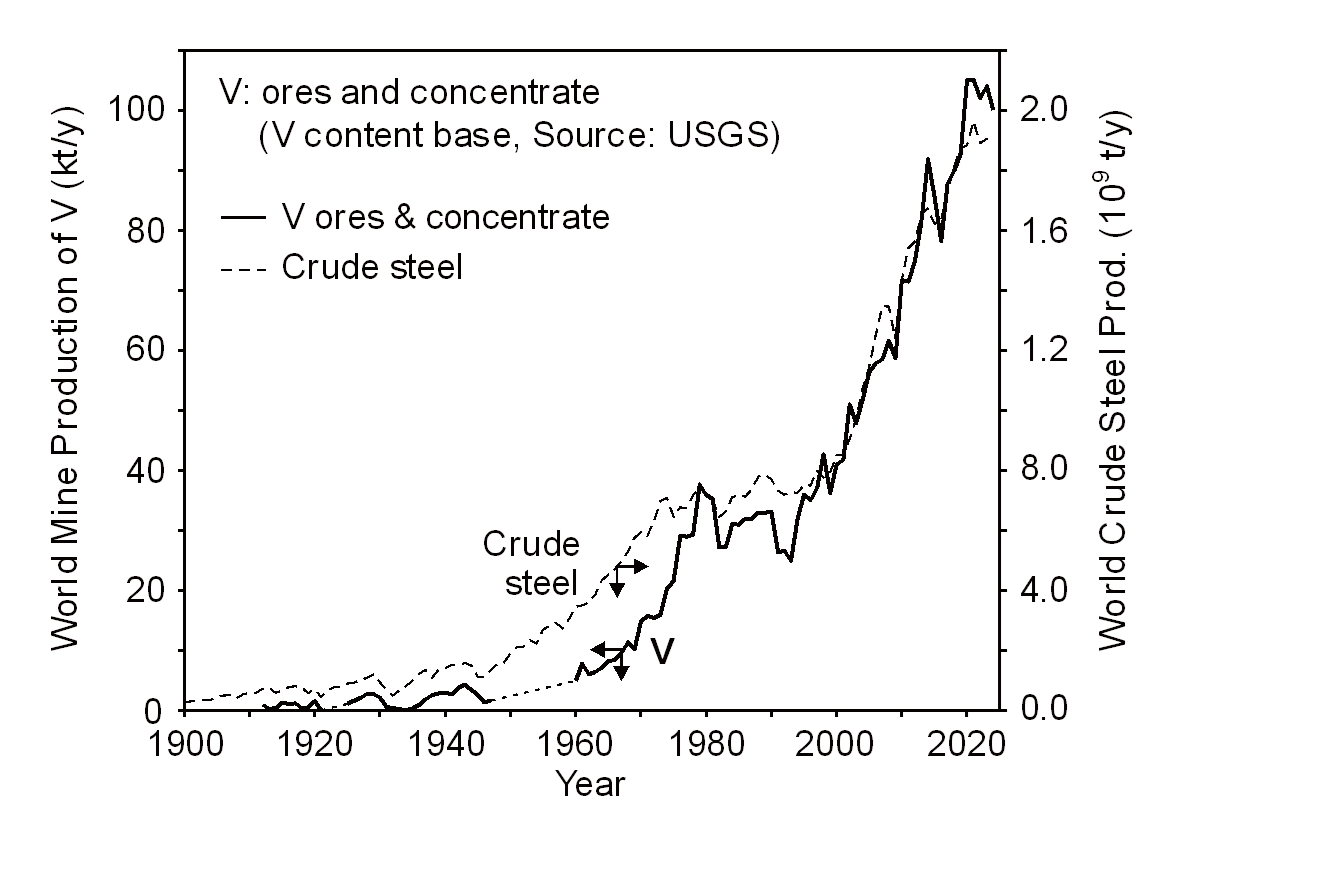
PDF - Global annual production of vanadium is approximately 100,000 tonnes; however, it remains a critical metal for steelmaking and modern industry. This study reviews the current status of vanadium smelting and recycling technologies. Approximately 90% of vanadium is produced as ferrovanadium (FeV) for use in steel alloys, although it is also utilized in titanium alloys, battery materials, and other applications. Both mineral ores and secondary waste resources serve as raw materials for vanadium production. These materials are typically subjected to roasting followed by acid or alkaline leaching to extract V₂O₅. Vanadium metal and FeV are produced from V₂O₅ primarily through aluminothermic reduction; alternatively, metallic vanadium can be manufactured via thermal reduction using Ca, Mg, or C, as well as by molten salt electrolysis. Crude vanadium is subsequently refined into high-purity metal through high-temperature vacuum treatment, electron beam melting, or molten salt electrolytic refining. Vanadium contained in steel scrap is recycled through re-melting in an electric arc furnace. Vanadium present in fly ash and spent catalysts is recovered using smelting processes similar to those applied to natural ores.
- [Korean]
- Smelting and Recycling of Niobium
- Ho-Sang Sohn
- J Powder Mater. 2025;32(6):517-528. Published online December 31, 2025
- DOI: https://doi.org/10.4150/jpm.2025.00367
- 1,349 View
- 13 Download
- 2 Citations
-
Abstract
PDF
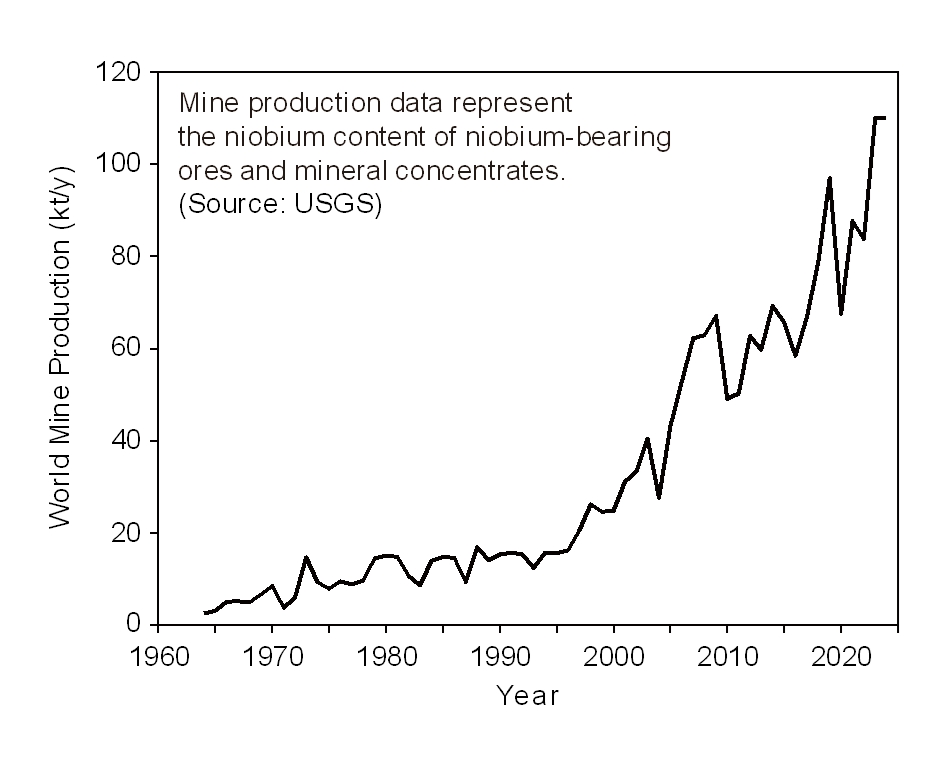
- Global annual production of niobium is only around 100,000 tonnes; however, it is a critical metal for modern industry and is mined in only a limited number of regions. This study reviews the current status of niobium smelting and recycling technologies. Approximately 90% of niobium is produced as ferroniobium (FeNb) for use in steel alloys, although niobium is also utilized in superalloys, superconductors, capacitors, semiconductors, and other applications. Niobium coexists with tantalum in columbite and tantalite ores. These ores are decomposed by hydrofluoric acid digestion or alkali fusion, followed by solvent extraction to separate Nb2O5 and Ta2O5. Niobium metal and FeNb are produced from Nb2O5 primarily via aluminothermic reduction, although metallic niobium can also be manufactured by thermal reduction using Mg, Ca, or C, as well as by molten salt electrolysis. Crude niobium is subsequently refined into high-purity niobium through molten salt electrolytic refining, high-temperature vacuum treatment, and electron beam melting. Because most niobium is used as an alloying element in stainless steel and high-strength low-alloy steel, recycling practices for niobium remain poorly documented.
-
Citations
Citations to this article as recorded by
 First
First Prev
Prev

TOP

